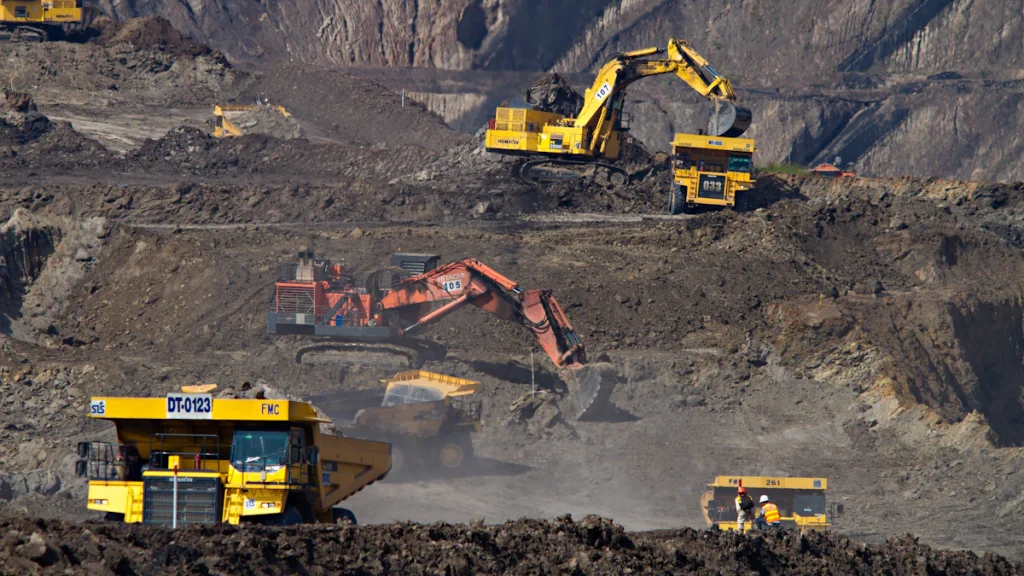
The critical minerals boom is reshaping the mining industry across the American West. Copper, lithium, gold, silver, and rare earth projects are accelerating in California, Nevada, and Arizona. Investment is flowing. New buyers — equipment procurement teams, engineering firms, environmental consultants, and site service contractors — are entering the market searching for suppliers and partners.
Most Southern California mining companies and mining service businesses are invisible to them online.
The companies winning contracts in this market are not necessarily the largest or most established. They are the ones who built a credible digital presence before the current demand surge. This post covers what digital marketing actually looks like for a mining business in Southern California — and why the next 12 months are the most important window to act.
The Southern California Mining Market Is Bigger Than Most People Realize
Southern California has a documented and active mining and metals sector that spans from the Inland Empire industrial corridor to the Mojave Desert and into adjacent Nevada and Arizona. The Inland Empire — covering Riverside, San Bernardino, Fontana, Ontario, and Victorville — is a major hub for metals processing, industrial equipment distribution, and mining services companies.
Real businesses operating in and around CDM’s service area include: Industrial Metal Supply (Riverside), which serves mining operators across the Inland Empire with same-day will-call and next-day delivery; Inland Empire Equipment (Alta Loma/Fontana), which buys and sells heavy mining and construction equipment globally including Caterpillar, Komatsu, Volvo, and Hitachi; Advanced Steel Recovery (Fontana), which handles metals processing; and dozens of smaller drilling contractors, safety equipment suppliers, and assay service companies concentrated in San Bernardino and Riverside counties.
In the Mojave Desert itself, active mining operations in 2026 include Providence Gold Mines’ Tarantula Gold Mine near Victorville (reporting up to 8.0 g/t gold from stockpile sampling in May 2026), K2 Gold’s Mojave Project (which raised C$25.25 million in January 2026 and allocated C$12 million for 2026 drilling, with an intercept of 86.9 meters at 4.0 g/t gold from surface), Four Nines Gold’s maiden drill program at Hayden Hill, Apollo Silver at the historic Calico silver district near Barstow, and the Golden Queen Mining Company’s open-pit heap-leach gold and silver operation on Soledad Mountain near Mojave. The BLM’s California Desert District oversees 177,421 mining claims, of which nearly 15,000 are currently active. This is not a dormant sector.
Why Mining Buyers Research Online Before They Ever Call
The mining procurement process has shifted significantly over the past five years. Engineering managers, site safety officers, and equipment procurement teams now conduct extensive online research before engaging a vendor. They search Google for supplier comparisons, read technical content on supplier websites, check Google Business Profiles for legitimacy signals, and look for case studies and project experience before making the first call.
This shift means that a Southern California mining equipment supplier or service company with a thin website, an unclaimed Google Business Profile, and no technical content online is losing RFQ opportunities before a human being at their company ever gets involved. Local SEO and digital visibility for B2B industrial businesses is not a consumer marketing concept — it applies directly to how mining procurement teams find and vet vendors.
What Digital Marketing Actually Looks Like for a Southern California Mining Company: Five Components
An effective digital marketing strategy for a SoCal mining or industrial business covers five distinct areas:
- Google Business Profile setup and optimization. Many mining and industrial businesses in the Inland Empire and Mojave corridor have unclaimed or completely empty GBPs. A fully built GBP with the right categories (Mining Company, Industrial Equipment Supplier), all service listings, project photos, and a defined service area covering the counties served is the single fastest visibility improvement available. It costs nothing and takes a few hours. Yet most mining suppliers in this market have never done it.
- A website with service-specific pages. A homepage that says “mining equipment and services” and a contact form is not a website that ranks or converts. Each major service needs its own optimized page — one for heavy equipment sales, one for parts and components, one for site safety consulting, one for assay services, and so on. Each page should reference the geographic areas served and answer the primary question a procurement buyer would have about that service.
- Technical content that demonstrates expertise. Mining buyers are technical. They are not impressed by generic marketing language. A supplier whose website includes content that addresses real operational questions — equipment specifications, failure modes, compliance requirements, processing efficiency data — signals credibility in a way that a polished homepage cannot. This content also ranks for specific technical searches that generic competitors never target.
- Citation consistency across industrial directories. Name, address, and phone number must be identical across Google, the Mining AMIGOS directory, Thomas Net, Ariba, regional Chamber of Commerce listings, and industry-specific supplier databases. Citation inconsistency suppresses local rankings and reduces confidence in a business’s legitimacy among buyers who cross-reference multiple sources.
- Targeted paid search for active procurement queries. When a site engineer in Nevada searches “underground mining conveyor parts Southern California” or a safety manager searches “confined space training Inland Empire mining,” a well-structured Google Ads campaign puts your business in front of that search at the exact moment of intent. The average cost per click in the mining industry runs around $4.85 — higher than consumer services, but the contract value of a single mining supply relationship makes the math work clearly in favor of paid search.
The B2B Buyer Journey in Mining Is Long — and That Changes the Content Strategy
Mining procurement decisions are not made in an afternoon. A new equipment supplier relationship might take three to six months from first search to signed contract, involving multiple stakeholders across operations, safety, procurement, and finance. This long cycle means digital marketing for a mining company needs to work across the entire buyer journey — not just at the moment of purchase intent.
Awareness content (technical articles, industry explainers, safety compliance guides) captures buyers early in their research. Comparison content (equipment specs, supplier differentiators, case studies) serves buyers who are actively evaluating options. Conversion content (clear service pages, pricing frameworks, contact paths) closes the loop when the buyer is ready to act. A mining company that only has conversion content on its website is invisible to 80% of the buyers who will eventually become customers.
This is also why Google Ads alone cannot carry the full strategy for a B2B mining business. Paid search captures active search intent. SEO and content marketing captures the much larger pool of buyers who are in the awareness and consideration phases. Both channels together cover the full buyer journey.
What the SoCal Mining Market Has That Most Other Markets Do Not
Southern California’s mining corridor has a geographic advantage that very few regions can match: direct proximity to the Nevada and Arizona mining districts that are at the center of the critical minerals boom, combined with the logistics infrastructure, ports, and manufacturing base of the greater Los Angeles market.
A mining equipment supplier based in Fontana or Riverside can serve active mine sites in the Mojave Desert, reach the Battle Mountain and Elko, Nevada mining districts within a day’s drive, and access the Arizona copper corridor from Tucson to Globe. That geographic reach is a genuine competitive advantage — but only if buyers in those markets can find the supplier online.
The businesses that will own the digital high ground in SoCal mining by 2027 are the ones building that presence now, before the broader industry recognizes that online visibility matters as much in this sector as it does in consumer services. That window is open. It will not stay open indefinitely.
Why Most SoCal Mining Companies Have Not Invested in Digital Marketing
The honest answer is that mining is a relationship-driven industry. Contracts have historically been won through industry conferences, personal networks, and word-of-mouth referrals from existing clients. Digital marketing felt irrelevant when the phone was already ringing from people you already knew.
Two things are changing that. First, the critical minerals boom is bringing new buyers into the market — junior miners, new investment-backed operators, and companies expanding into California who do not have established local supplier relationships. These new buyers go to Google first. Second, an aging generation of mining professionals is being replaced by younger procurement managers and engineers who expect to find supplier information online the same way they find everything else.
The SoCal mining businesses that adapt to this shift will have a structural advantage over competitors who wait. Creative Digital SEO works with businesses across the Los Angeles and Inland Empire market and understands how to build digital visibility for industrial and B2B clients. Contact us here to discuss what a digital marketing strategy looks like for your mining or industrial business.
Frequently Asked Questions
Q: Does SEO actually work for a B2B mining company in Southern California?
Yes, but the approach is different from consumer local SEO. B2B mining SEO targets procurement-specific search queries — equipment types, service categories, geographic service area combinations, and technical specification searches. A mining equipment supplier who ranks for “underground conveyor systems Inland Empire” or “mining safety training San Bernardino County” is capturing exactly the right buyer at exactly the right moment, regardless of overall search volume.
Q: How long does it take for digital marketing to generate leads for a mining company?
Google Business Profile improvements and basic citation cleanup can produce measurable visibility improvements within 30 to 60 days. Google Ads campaigns can generate qualified leads within the first week if the account is set up correctly. Organic SEO for competitive mining industry keywords takes three to six months for meaningful ranking movement. Given the long B2B sales cycles in mining, starting the organic strategy now while running paid search in parallel is the most efficient approach.
Q: What is the right monthly budget for Google Ads for a mining supplier in Southern California?
At the mining industry average CPC of approximately $4.85, a $3,000 to $5,000 monthly budget generates roughly 600 to 1,000 targeted clicks per month. At a typical B2B industrial conversion rate of 2 to 4%, that produces 12 to 40 qualified inquiries. Given that a single new mining supply contract can be worth $50,000 to $500,000 or more, the return on a well-managed paid search investment in this market is exceptional.
Q: Does a mining company based in Fontana or Riverside need to specifically target its geographic market online?
Absolutely. Mining procurement searches are often geographically specific. A Fontana equipment supplier serving the Mojave Desert, Nevada, and Arizona should have website content and GBP service areas that reflect all three regions. A company that only optimizes for “Fontana” or “Riverside” is invisible to buyers searching from Victorville, Barstow, or Las Vegas who are in their practical service range.
Ready to Build Digital Visibility for Your SoCal Mining Business?
Creative Digital SEO works with businesses across Los Angeles, the Inland Empire, and the wider Southern California market. We understand industrial and B2B marketing — the long sales cycles, the technical buyer personas, and the local market dynamics that make the SoCal mining corridor a distinct opportunity. Reach out here for a straightforward assessment of where your online presence stands and what it will take to be visible to the buyers actively searching for what you offer.
The Southern California mining market is active, growing, and underserved by digital marketing. The businesses that move first own the search results that matter.